educating means accompanying
Our way of educating
For us, educating means accompanying.
It means standing by each student so they can discover their capabilities, develop their talents, and grow as individuals. We believe that education goes far beyond the transmission of knowledge: it is a process that helps one understand the world, form one’s own perspective, learn to live with others, act responsibly, and prepare to face the challenges of a constantly changing future.
We view learning as a living, meaningful experience. Each student constructs their knowledge through curiosity, reflection, experience, and interaction with others. Learning involves asking questions, experimenting, making mistakes, persevering, and discovering new ways of thinking about and understanding reality.
On this journey, the student is the protagonist of their own growth process. We trust in their ability to engage, take responsibility, and progressively develop their autonomy.
The teacher supports this process through knowledge, closeness, and commitment. Their role is to create the conditions that allow each student to progress, feel secure, face new challenges, and reach their full potential.
This approach to education gives meaning to our educational project and enables us to guide each student in discovering their future.

Active, competence-based learning in neurodidactics
.01How we learn
Our methodological criteria are based on an understanding of how people learn, incorporating insights from neurodidactics and educational research.
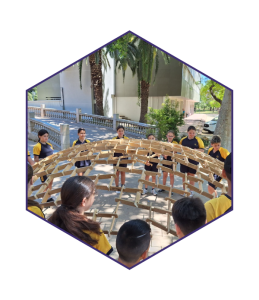
We foster active, competency-based learning that is connected to the real world, utilizing challenges, projects, and meaningful experiences that promote autonomy, curiosity, reflection, and critical thinking. We also recognize that physical spaces, relationships, experiences, and the educational climate are integral to the learning process, helping to create contexts that support student development.
Personalizing learning based on the uniqueness of each student
.02 Each student, one process

We understand the personalization of learning as the ability to tailor the educational response to the starting point, pace, needs, and potential of each student. We aim to provide diverse opportunities so that every individual can make progress, develop their capabilities, and progressively take on an increasingly active, conscious, and autonomous role in their own learning.
Inclusive education and attention to diversity
.03A school for everyone
Our approach to inclusive education and addressing diversity is rooted in the commitment to ensuring that all students can participate, learn, and develop within a single educational community. We tailor our educational response based on an understanding of each individual student, employing universal, additional, or intensive measures, individualized plans, enrichment opportunities, and other specific forms of support whenever necessary.
We also utilize the SIEI (Intensive Support for Inclusive Education) framework, which provides enhanced guidance for students requiring greater support, thereby fostering their personal, social, and academic inclusion. This approach is developed through coordinated efforts among teaching staff, families, specialized professionals, and external services.
Our families are committed to respecting the rules of operation of the center and to collaborating in all those tasks that in the field of the education of their children are the responsibility of the family (punctuality, attendance, meetings with tutors, etc.). This commitment is manifested in the signing of the Letter of Educational Commitment by the School and the Family, drafted in accordance with the provisions of Law 12/2009 on Centers and Decree 102/2010 on Autonomy of Centers.
Tutoring, guidance, and personalized follow-up
.04 We accompany each trajectory
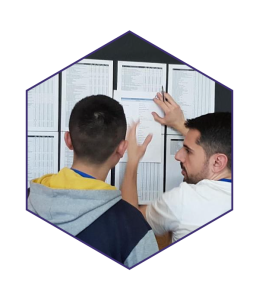
Support, tutorial guidance, and counseling allow for the continuous monitoring of each student throughout the various educational stages. This support encompasses personal, academic, emotional, and social dimensions, and is built upon a close, trusting educational relationship.
Over time, this guidance helps students gain a better understanding of their own abilities and interests, make decisions, and develop their own academic, personal, and professional paths.
Continuous, comprehensive, and formative assessment
.05 Rate to move forward
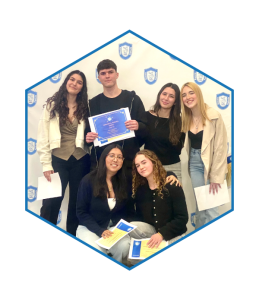
We view the assessment of learning as an inseparable part of the educational process. It allows us to track each student’s development, identify progress and challenges, and adjust our educational approach accordingly. We employ a variety of procedures, tools, and evidence of learning tailored to each stage, and we provide formative feedback to help students understand what they are learning, what they have achieved, and what they need in order to continue moving forward.
In this way, we foster an increasingly conscious and responsible participation by students in their own learning process.
